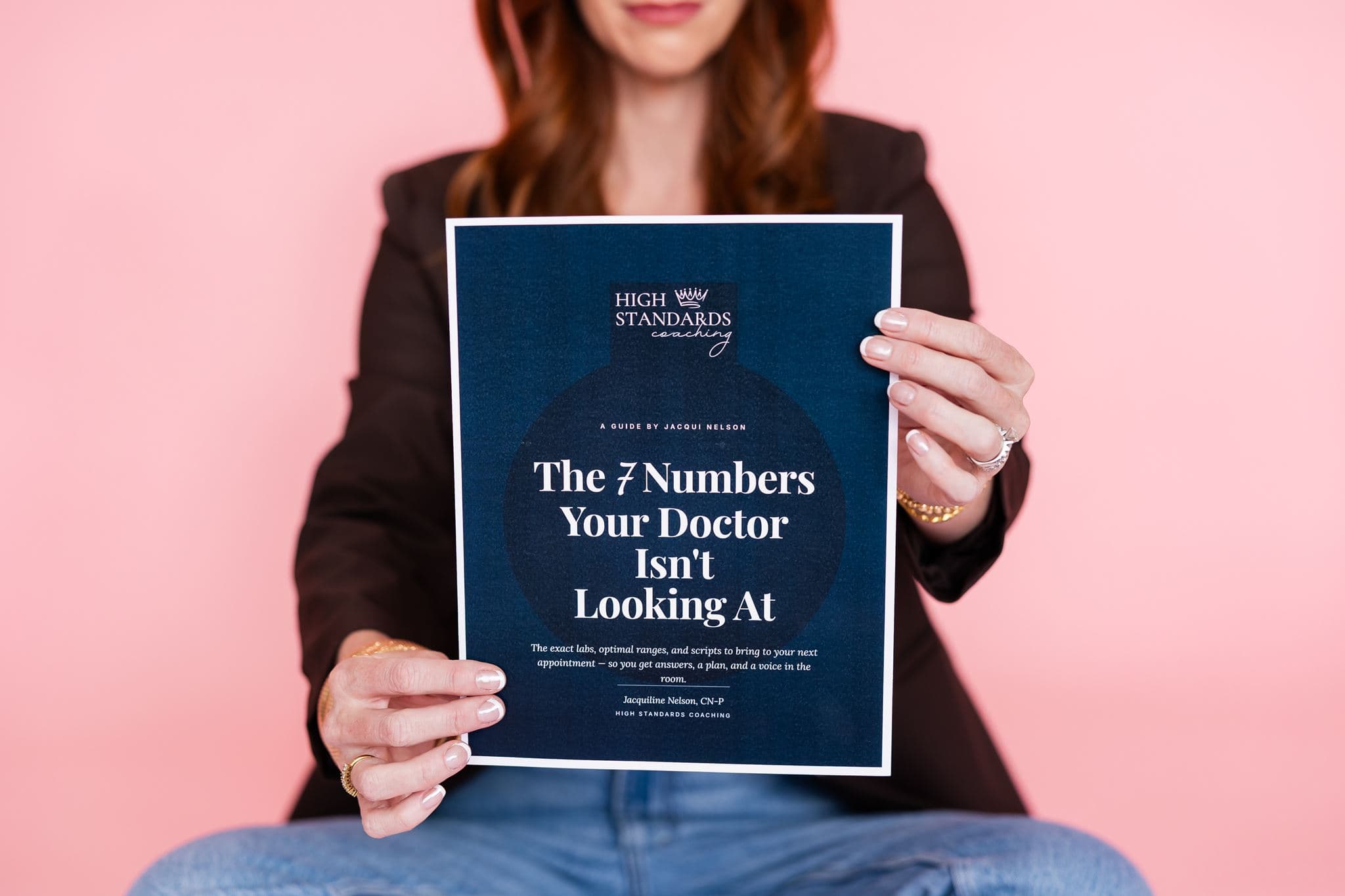
The 7 Numbers Your Doctor Isn’t Looking At
The exact labs, optimal ranges, and word-for-word scripts that explain the exhaustion, the brain fog, the weight that won’t budge, and the “everything looks normal” results you keep getting.
Send Me the GuideThyroid · Glucose · Ferritin · CRP · Cortisol · B12 · Hormones
This guide gives you clarity your doctor won’t.
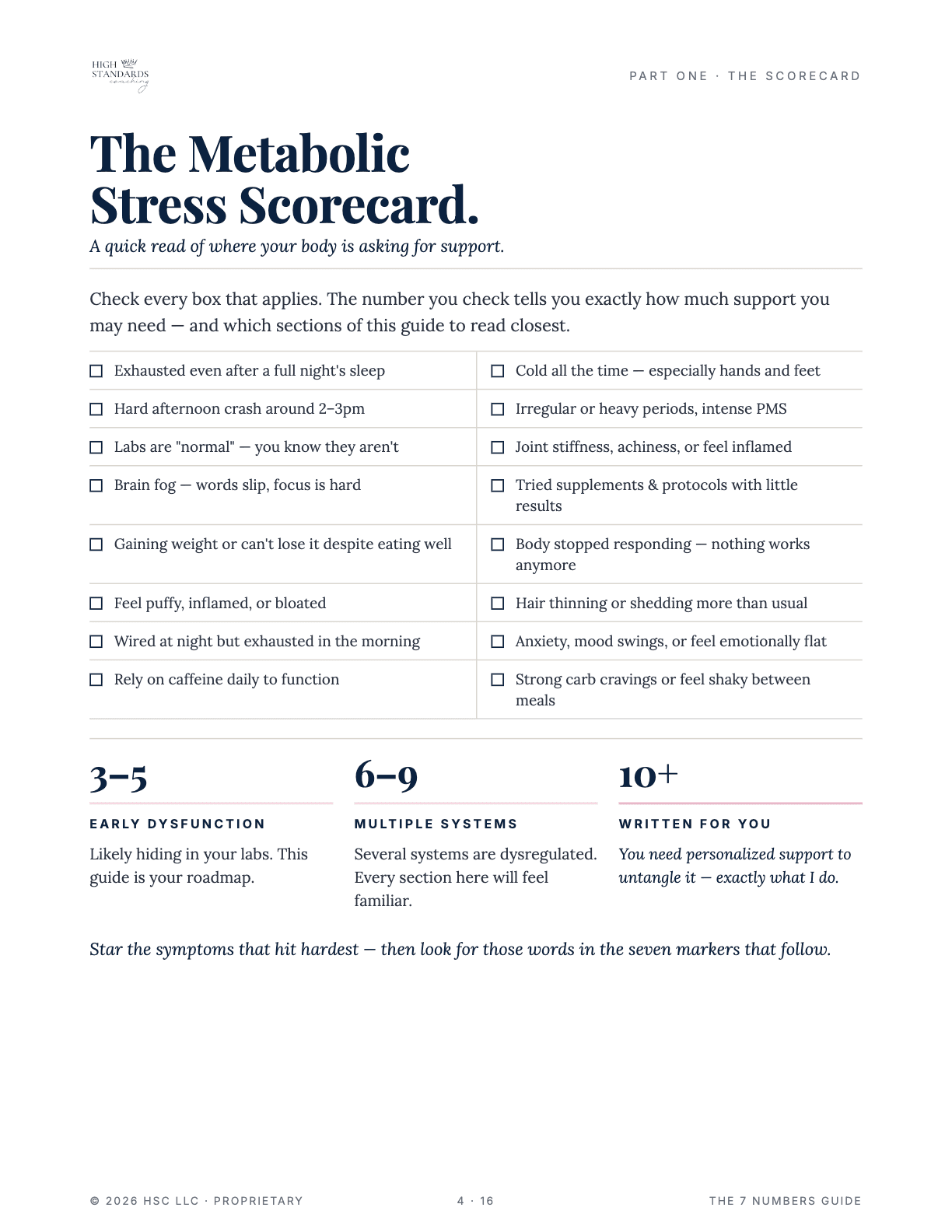
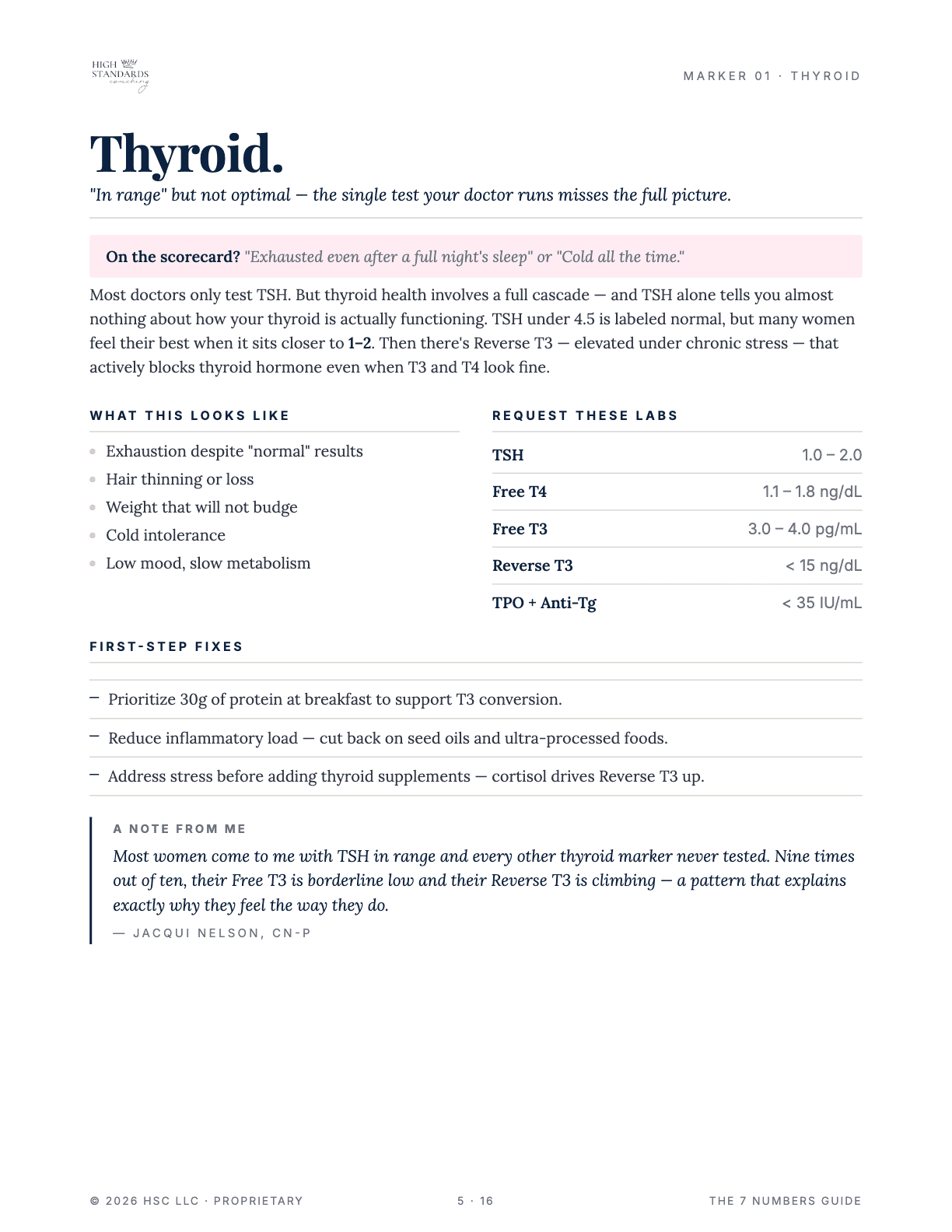
The 7 Critical Markers
The specific lab markers that reveal what’s really going on with your energy, metabolism, hormones, and inflammation — even when your standard panel says “normal.”
Normal vs. Optimal Ranges
The difference between what’s considered “in range” and what actually supports you feeling your best — and why that gap matters more than most practitioners will admit.
The Feedback Loops
How these markers connect to each other — and why missing even one can keep you stuck in a cycle of fatigue, cravings, and hormonal chaos.
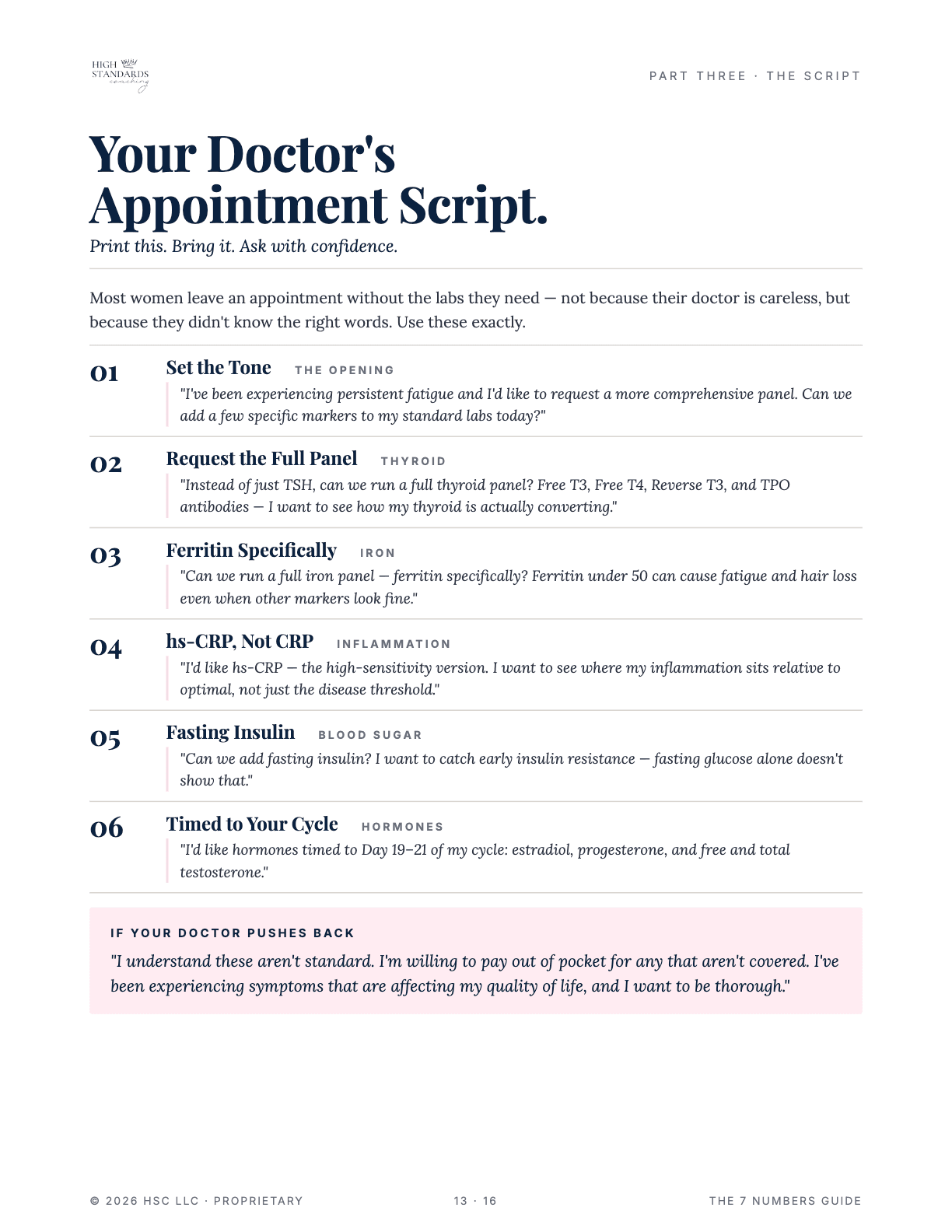
A Word-for-Word Script
Exactly what to say at your next appointment to request these labs confidently — no second-guessing, no pushback, no wasted visits.
16 pages that explain what years of appointments haven’t.
If you’ve been told “everything looks fine” but you know it’s not — this guide was made for you.
This is for the woman who’s tired of being dismissed. Who knows something is off but can’t get a straight answer. Who wants to stop guessing and start knowing exactly what to ask for.
Before you download
My labs came back normal, but I’m exhausted and losing hair. What should I ask for?
Start by asking which markers were actually run. A standard panel often leaves out the ones most often tied to fatigue and hair changes, such as a full thyroid panel rather than TSH alone, ferritin alongside iron, and markers of blood sugar and inflammation. The guide covers all seven and gives you a word-for-word script for requesting them. Your practitioner decides what to order and reviews the results with you.
What’s the difference between a normal range and an optimal range?
A reference range describes where most of the people tested happen to fall, and many of them do not feel well. Landing inside it tells you that you are not in crisis. It does not tell you that a marker is where your body works best. Optimal ranges are narrower, and reading your results against them often explains why “normal” and the way you feel do not match. The guide walks through the difference marker by marker.
Do I need recent labs to use the guide?
No. If you have recent results, keep them beside you as you read. If you don’t, the guide shows you exactly what to ask for at your next appointment.
Is this guide medical advice?
No. It is education, to help you understand your own labs and have a better conversation with your provider. It does not diagnose or treat any condition, and it is not a substitute for medical care.

Grab your free guide.
Enter your info below and all 16 pages will be sent straight to your inbox.